INDUSTRIES · MERCHANTS
Add a rail. Keep your acquirer.
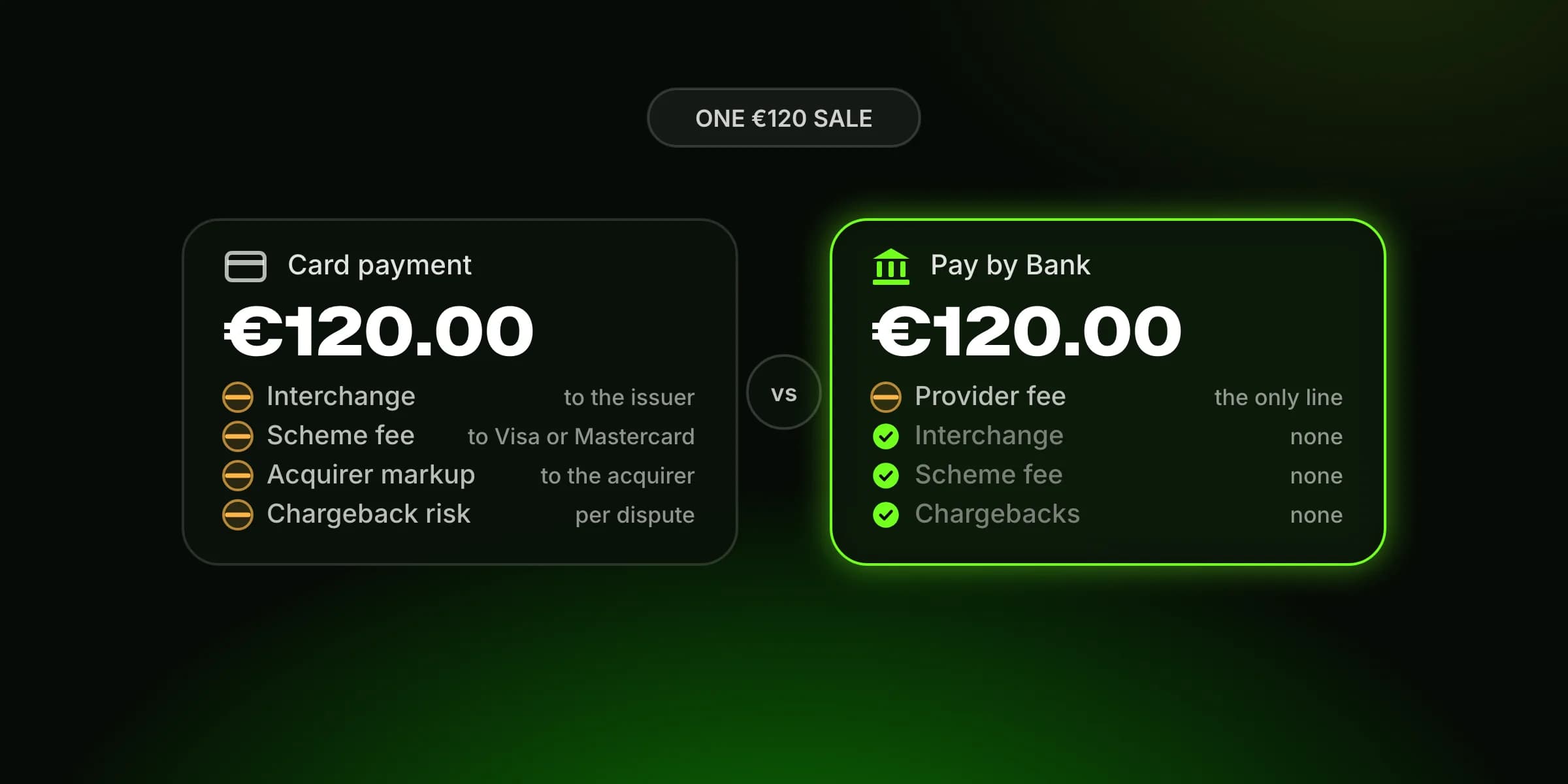
Pay by Bank goes in beside the card setup you already have — as a cheaper route, as a fallback when cards decline, or as both.
What this is for
Declines you cannot fix
Your acquirer is not the one saying no. The issuer is, and you have no lever on it.
One rail, one point of failure
When your provider has a bad afternoon, so do you.
Cost that scales with cards
Interchange grows with volume. Your margin does not.
A migration you do not want
Replatforming payments is a quarter you will not get back.
Your checkout, before and after
TODAY
- Checkout
- →Your acquirer
- →Issuer decides
- →Declined — sale lost
WITH SOLA BESIDE IT
- Checkout
- →Routing
- →Pay by Bank, or your acquirer
- →Paid
Nothing in the first row is removed. The second row is what gets added beside it.
How it sits beside what you have
- 01
No migration
Your card flow stays exactly where it is, with the provider you already use.
- 02
When a card fails, the customer is offered their bank instead of a dead end.
- 03
Cheaper by default
Volume that can clear on Pay by Bank does, and the rest carries on as before.
- 04
One reconciliation
Both rails land in one report, not two exports and a spreadsheet.
- Works beside any acquirer
- No replatforming
- Hosted or embedded
- UK and EU coverage
- To go live, at the fastest
- A week
- Changes to your acquirer
- 0001234567890123456789
- Markets covered
- 28201234567890123456789801234567890123456789
- Reconciliation
- 1101234567890123456789
Questions we get
No. That is the point of this setup — we go in beside it, and you keep the acquirer relationship you have.
A bank option at checkout, hosted by us or embedded in your own UI. They approve in their banking app and come back.
As little as a week for a standard setup, because nothing in your existing flow has to change.
Payments strategy
· 10 min read
Tell us what you are paying now.
We come back with a written cost comparison against your current setup, usually within two working days.