
BLOG · Regulation
Instant Payments Regulation: what SEPA Instant and Verification of Payee change for merchants
The deadlines, the price rule, the name check before every transfer, and the few things a merchant should actually do about them.
Since 9 October 2025, every bank in the euro area that lets its customers send euro transfers has had to let them send instant ones too, and check the payee’s name before the money leaves. Both obligations come from the Instant Payments Regulation, and both change what happens when your customers pay you by bank.
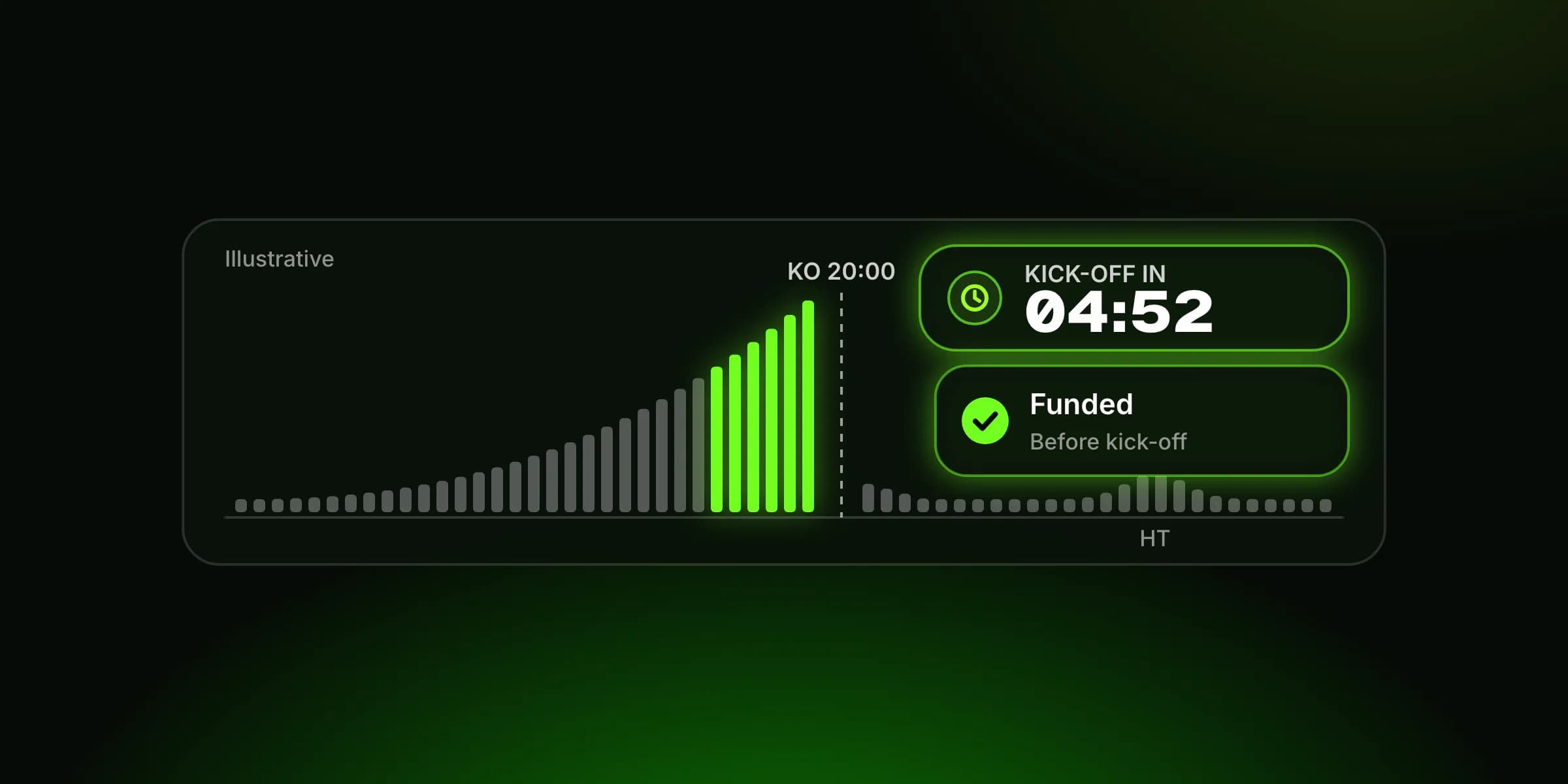
Short answer: the regulation made SEPA Instant the norm in the euro area. Transfers must arrive within 10 seconds, at any hour, and cost no more than a standard transfer. It also added Verification of Payee: before a customer approves a transfer, their bank checks that the name they entered matches the account they’re paying. Merchants aren’t obliged to do anything, but two things are worth doing now: check the name your bank holds for your account, and look at how your refunds go out.
What the Instant Payments Regulation requires
Regulation (EU) 2024/886 amended the EU’s SEPA rules. Its core is simple: a payment service provider that offers euro credit transfers must offer instant ones to all its customers, and every account that can receive a transfer must be able to receive an instant one, 24 hours a day, on any calendar day.
An instant transfer has to complete within 10 seconds of the payer’s bank receiving the order. The receiving bank must credit the account and confirm within that window. If no confirmation arrives, the payer’s bank must put the money back. The value date is the day of the credit, weekends included.
The obligations fall on banks and payment providers, not on merchants. You don’t have to accept instant payments or run any checks yourself. Some articles say instant payments are “mandatory for online shops”, and that is wrong.
Deadlines in the euro area
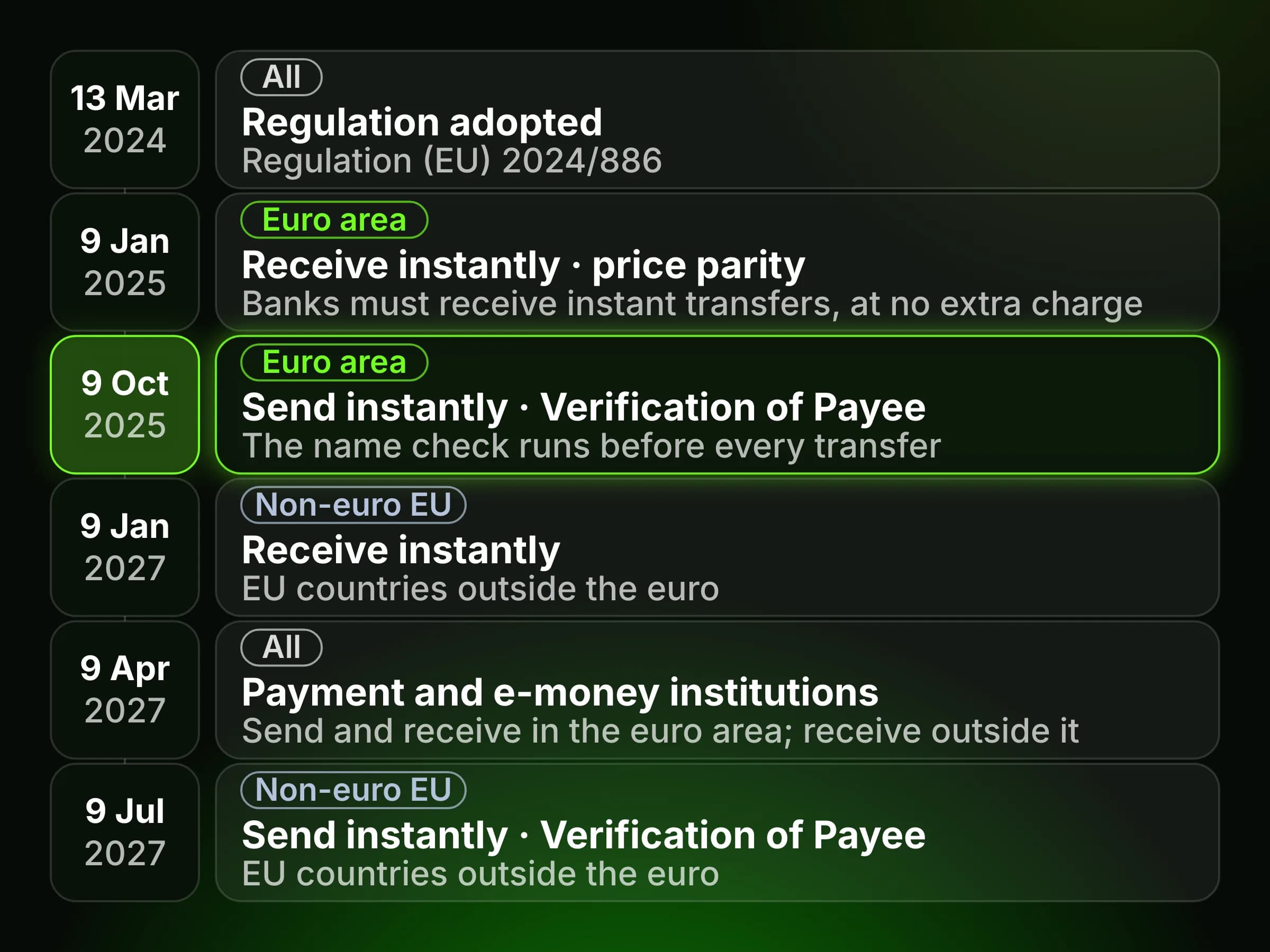
9 January 2025: banks must be able to receive instant transfers, charge no more for them than for standard transfers, and screen customers against EU sanctions lists daily.
9 October 2025: banks must be able to send instant transfers and offer Verification of Payee.
9 April 2027: payment institutions and e-money institutions must send and receive instant transfers.
Outside the euro area
EU countries that don’t use the euro follow later: receiving by 9 January 2027, sending and Verification of Payee by 9 July 2027. Payment and e-money institutions there must receive by 9 April 2027 and send by 9 July 2027.
Two practical limits remain. There is no longer a maximum amount at scheme level: the European Payments Council dropped its €100,000 default in the rulebook that took effect on 5 October 2025. But banks can still set limits for their own reasons, and customers have the right to set their own daily or per-payment limit on instant transfers. A large payment can still be refused.
Instant can’t cost more than standard
Under the regulation’s price parity rule, whatever a bank charges its customers for sending or receiving an instant transfer can be no higher than what it charges for the corresponding standard transfer. It removes price as a reason to choose a slower transfer.
What the rule doesn’t do is regulate what a payment provider charges a merchant to collect payments. It covers a bank’s own charges to the people sending and receiving transfers. Anyone who tells you parity makes instant payments free to accept is reading more into it than is there.
Verification of Payee: the name check before every transfer
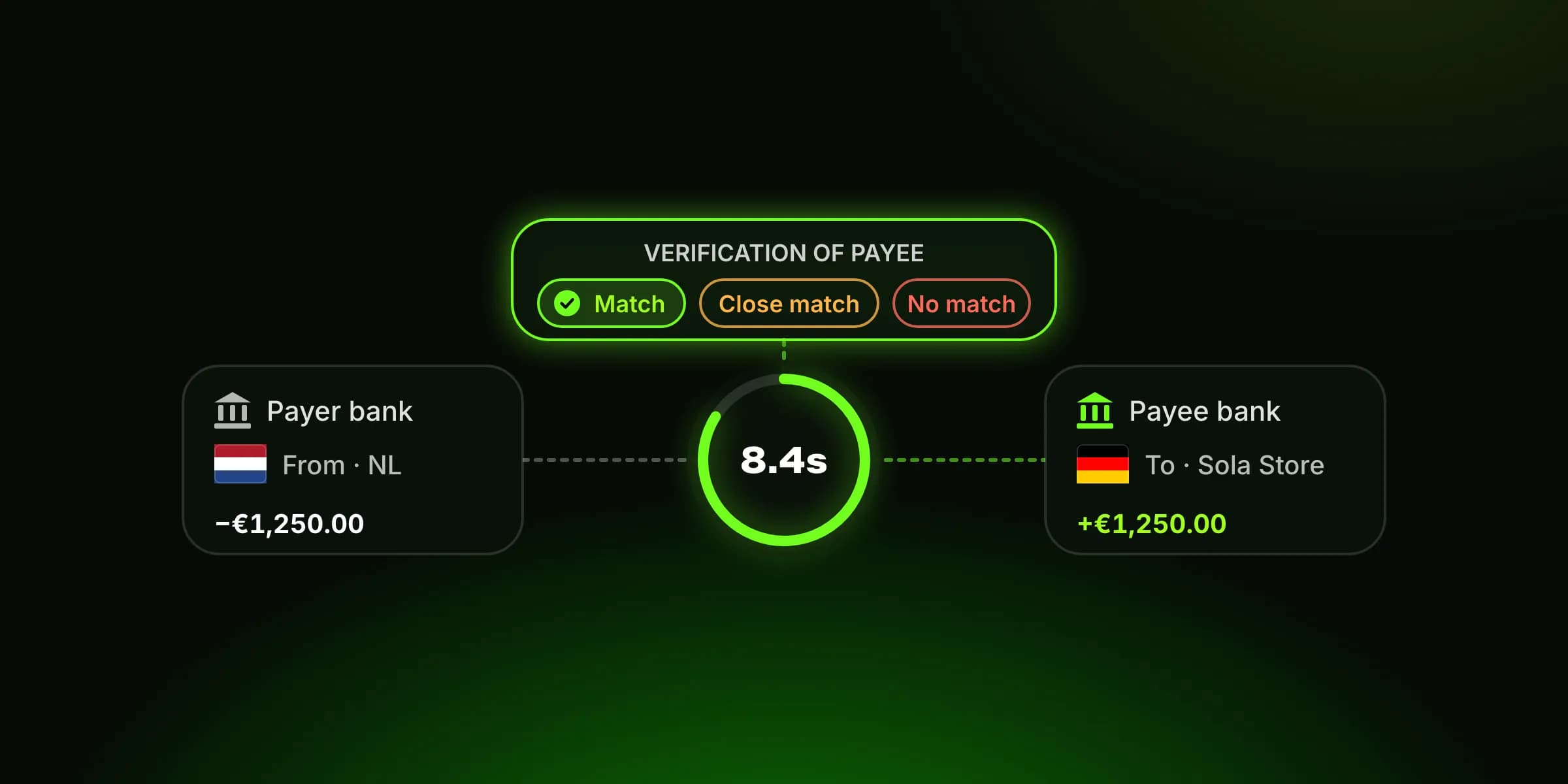
Verification of Payee (VoP) is the part most likely to touch your business directly. When a customer enters a payee’s IBAN and name to make a transfer, their bank asks the payee’s bank whether the two match, before the customer is asked to approve. It applies to standard and instant transfers alike, and it’s free.
There are four results:
Match: the name fits the account. The payment goes ahead as normal.
Close match: the name is nearly right. The customer is shown the name the bank actually holds for that account, and can correct what they typed.
No match: the customer is warned that the money may go to an account that doesn’t belong to the payee they intended.
Other: the check couldn’t be completed.
VoP warns; it doesn’t block. The customer can still approve after a “no match”. The regulation shifts responsibility instead: a bank that carried out the check isn’t liable for a payment sent to the wrong account on the customer’s own details, and banks must tell customers what ignoring a warning means for their right to a refund. For a business, the regulation defines the payee’s name as its commercial or legal name.
What it means for the name on your account
Here is the case that catches companies out. Your legal name is “Brightwater Trading GmbH”. Your invoices and checkout say “Brightwater”. A customer pays your invoice by transfer and types “Brightwater”. Depending on how your bank matches names, that’s likely to come back as a close match, and your customer is shown “Brightwater Trading GmbH” and asked to confirm. Some will. Some will stop and email you.
Banks typically match against the registered legal name, or a trading name if it’s recorded on their systems, according to guidance Irish banks published for businesses. The fix is boring and effective: put your legal name on invoices and payment pages, or have your trading name recorded with your bank, and use one name consistently.
Refunds and payouts sent by bank transfer
The same check runs in the other direction. When you refund a customer by bank transfer, your bank checks the name you hold for them against their account. A customer who registered as “Bob Smith” with an account in the name of “Robert J. Smith” may come back as a close match.
Businesses that send batches of payments can opt out of VoP for those packages: the regulation requires banks to offer non-consumers that choice. Opting out is a contract matter with your bank, and its terms decide who carries the loss if a batch payment goes to the wrong account. Whether to opt out is a decision for your finance team, not a default to switch on.
What it changes for Pay by Bank
For bank payments at your checkout, the big change is coverage. A Pay by Bank payment is a credit transfer from your customer’s account, approved in their banking app. When their bank sends it on SEPA Instant, it settles in seconds; when it goes as a standard transfer, it arrives by the end of the next business day. The regulation pushes more payments onto the first path. According to the European Payments Council’s November 2025 report, instant transfers were 30.7% of all SEPA credit transfers by number in the third quarter of 2025, up from 19.7% a year earlier.
Verification of Payee works differently when a payment provider starts the payment for your customer. The customer doesn’t type your IBAN and name; the provider supplies them. The regulation makes the provider responsible for making sure those details are correct.
What is still not instant
“Instant everywhere” isn’t quite true yet:
Payment institutions and e-money institutions in the euro area have until April 2027.
EU countries outside the euro area follow through 2027, and the regulation only covers euro transfers.
Banks can schedule maintenance, which the regulation doesn’t penalise when it’s planned and announced.
Bank limits and customers’ own instant limits still apply.
Countries outside the EU aren’t covered by the regulation. The UK, for one, has its own Confirmation of Payee scheme.
What’s next: PSD3 and the Payment Services Regulation
The EU’s next payment rules, a revised directive (PSD3) and a new Payment Services Regulation, were agreed politically on 27 November 2025. Member states’ representatives confirmed the deal on 22 April 2026, and the European Parliament’s economic affairs committee approved the regulation’s text on 5 May 2026. As of October 2026 both texts are still awaiting formal adoption, so neither is law.
Among other things, the new regulation is expected to extend name checks to all credit transfers and to change who carries the loss when fraud gets past them. Secondary sources describe the final design differently, and the dates depend on when the texts are adopted, so treat anything more specific than that with care until the final text is published.
What merchants should do now
None of this is mandatory for a merchant. All of it saves support tickets:
Ask your bank what name it holds for your account, and whether your trading name is recorded.
Use that name on invoices and payment pages, consistently and without abbreviations.
Look at your refund and payout runs. Check that the customer names you hold are good enough to match their accounts, and decide deliberately whether to opt batches out of VoP.
Ask your payment provider how payments from your customers’ banks confirm, and what your customers see when a bank is slower.
Update the copy on your refund pages if refunds by bank transfer now arrive in seconds rather than days.
Keep an eye on the Payment Services Regulation as it moves towards adoption.
Frequently asked questions
What is SEPA Instant?
SEPA Instant (SCT Inst) is the European scheme for euro credit transfers that complete within 10 seconds, 24 hours a day, every day of the year. Under the Instant Payments Regulation, banks in the euro area must be able to receive instant transfers since January 2025 and send them since October 2025.
Is SEPA Instant mandatory?
For banks and payment providers, yes, on fixed deadlines: euro-area banks since 2025, payment and e-money institutions by April 2027, and banks in non-euro EU countries by January 2027 for receiving and July 2027 for sending. For merchants, no. Nothing in the regulation requires a business to accept instant payments or change how it gets paid.
What is Verification of Payee?
Verification of Payee is a free check that a customer’s bank runs before they approve a transfer: does the name they entered match the IBAN? The result is match, close match (with the correct name shown), no match or not possible. It warns rather than blocks, and it applies to standard and instant transfers.
Do instant payments cost more than normal transfers?
No. Under the regulation’s price parity rule, a bank can’t charge its customers more for sending or receiving an instant transfer than for the equivalent standard one. The rule covers banks’ charges to payers and payees. It doesn’t set what a payment provider charges a merchant.
Can a business opt out of Verification of Payee?
Only for payments sent as a batch. Banks must let business customers opt out of Verification of Payee for packages of payments, and opt back in at any time. Single payments always go through the check; there is no opt-out for them. Opting out is agreed with your bank, whose terms decide who carries the loss if a payment goes astray.
Where Sola fits
Sola’s Pay by Bank runs on instant and non-instant rails across 3,000+ connected banks in euros. Funds are confirmed in seconds where the customer’s bank supports instant payments, and where a bank is slower, the status updates automatically by webhook or polling. Refunds from the dashboard are coming soon. See coverage by market, our Germany page, and what your customer sees during a bank payment.
Sources
Regulation (EU) 2024/886 on instant credit transfers in euro, EUR-Lex, 13 March 2024
Instant Payments Regulation: implementation deadlines, European Central Bank
Status update on the SCT Inst scheme, QR-code standardisation and the VoP scheme, European Payments Council for the ERPB, 3 November 2025
Status update on the SCT Inst scheme (maximum amount), European Payments Council for the ERPB, 21 November 2024
Additional VoP information for businesses, Banking & Payments Federation Ireland
Revision of EU rules on payment services, European Parliament Legislative Train, updated 20 September 2026
State of play of legislative proposals in financial services (13589/26), Council of the EU, 2 October 2026
Check your instant coverage
Send your markets and volumes. We'll share the bank list for each market and come back with a written cost comparison.
Get a cost comparison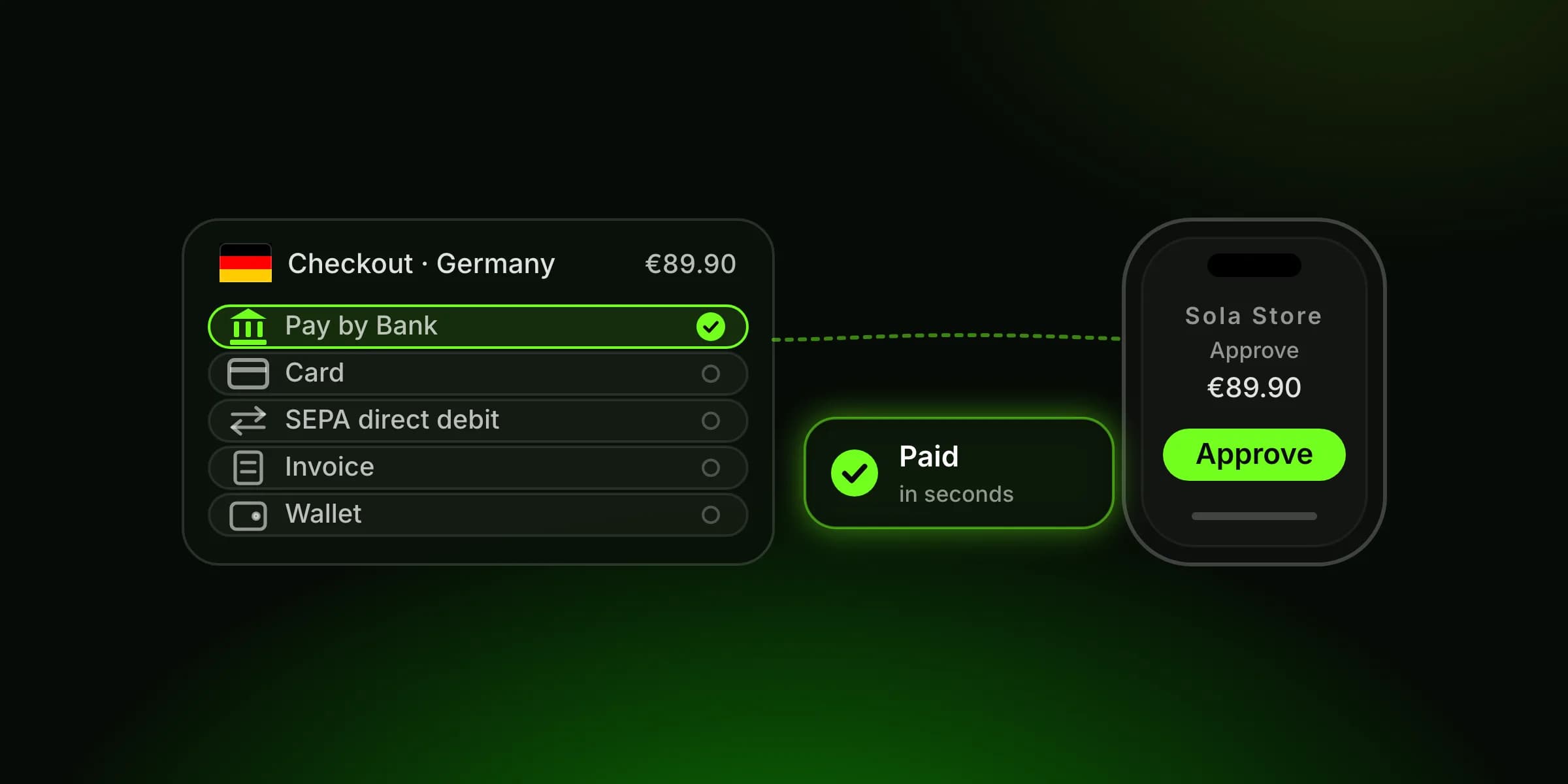
Payments strategy
Pay by Bank vs card payments: what each sale really costs
NEWSLETTER
One email a month. No fluff.
New articles on Open Banking, card costs, routing and regulation — straight to your inbox. Unsubscribe in one click.